ฝรั่ง (Farang) / Guava
Family: Myrtaceae
Psidium guajava, known in Thai as ฝรั่ง, is one of the most common tropical fruit trees found in home gardens across Thailand. Both the fruit and the leaves are used extensively in traditional Thai medicine for their cleansing and digestive properties.
Botanical Characteristics
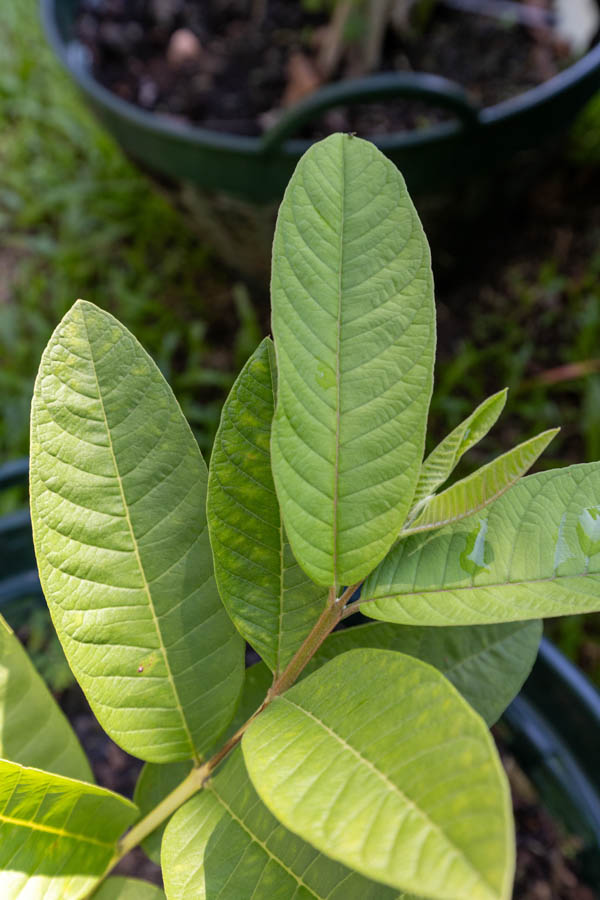
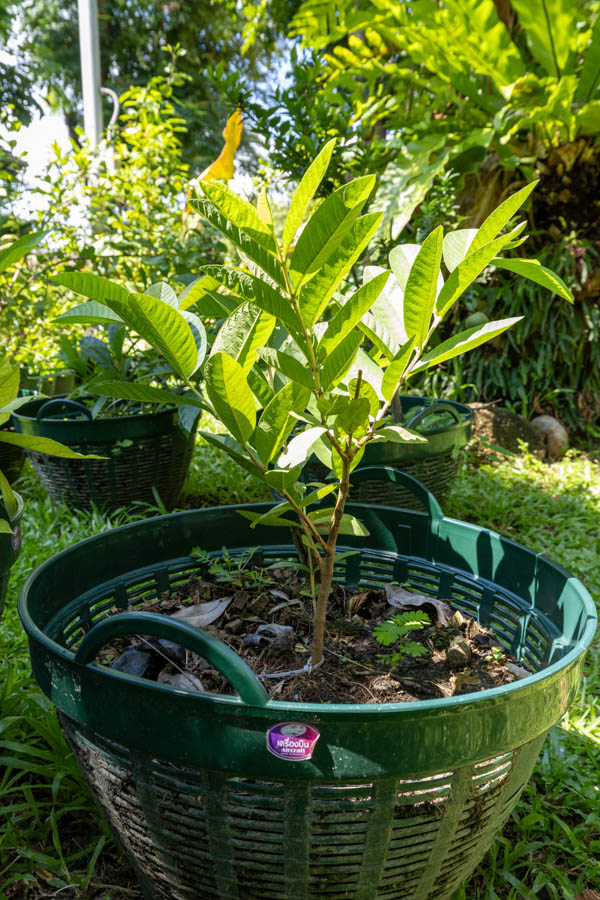
Guava is a small evergreen tree, typically 2–8 meters tall, with smooth, thin bark and opposite, elliptic leaves. The leaves have prominent veins and a faint aromatic scent when crushed. The tree produces white flowers and green to yellow fruit containing sweet, pink or white flesh rich in vitamin C.
Use in Thai Traditional Medicine
The young leaves are boiled to make a decoction used to treat diarrhea, stomach pain, and mouth ulcers. The astringent properties of guava leaf tea help reduce intestinal inflammation and balance the digestive system. The fruit is eaten fresh to boost immunity and assist in detoxification.
Medicinal Compounds
Contains quercetin, tannins, and flavonoids with antibacterial and antioxidant properties. The leaf extract is widely recognized for its anti-diarrheal and anti-inflammatory effects, while the fruit provides a rich source of vitamin C and fiber.
Culinary Uses
Guava fruit is consumed raw, juiced, or made into jams. In Thailand, it is often enjoyed with chili salt as a refreshing snack. The leaves can also be dried and brewed as a herbal tea for digestive support.
Cultivation Notes
Psidium guajava thrives in tropical climates with good sunlight and well-drained soil. It can be propagated from seeds or cuttings. Pruning improves airflow and promotes fruit production. Regular watering supports lush growth and healthy fruiting.
Disclaimer: This information is provided for educational and historical purposes only. It is not intended as medical advice. Always consult a qualified healthcare professional before using any herbal preparation.